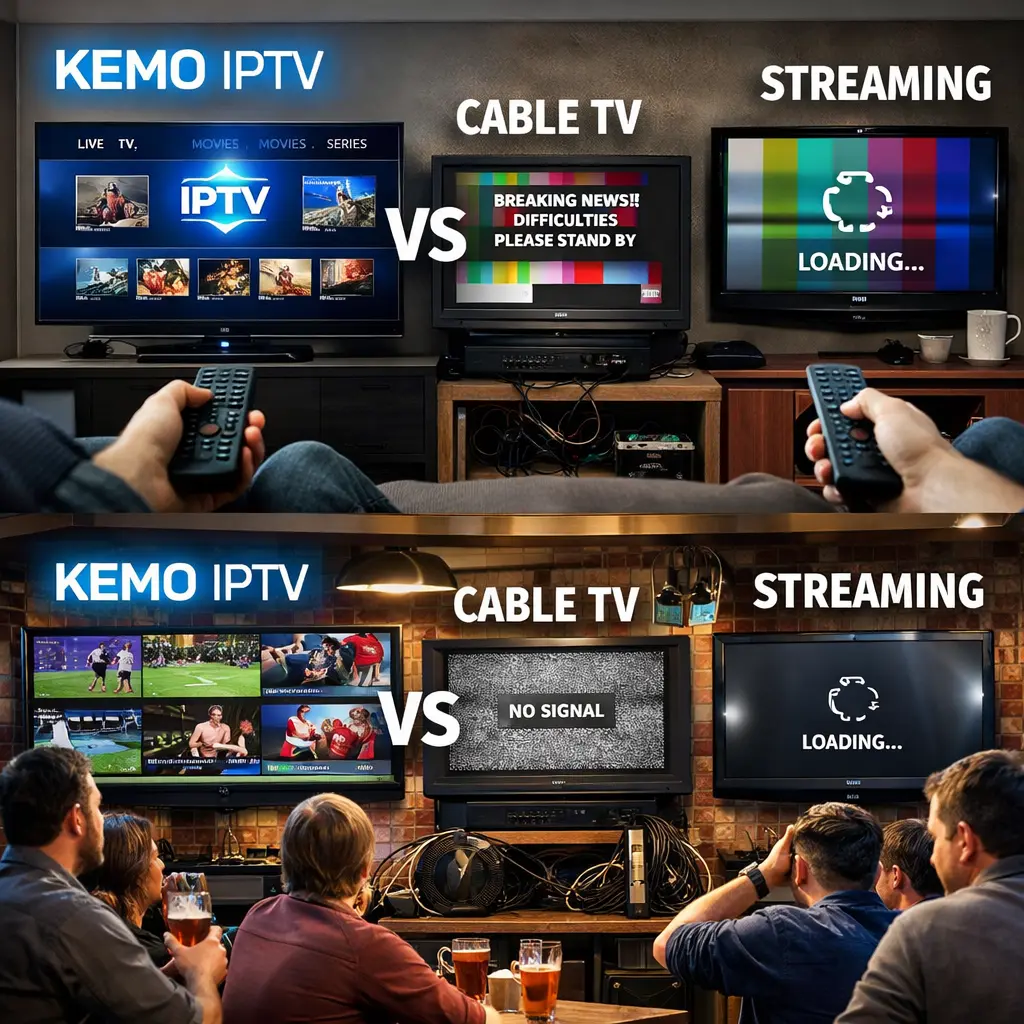
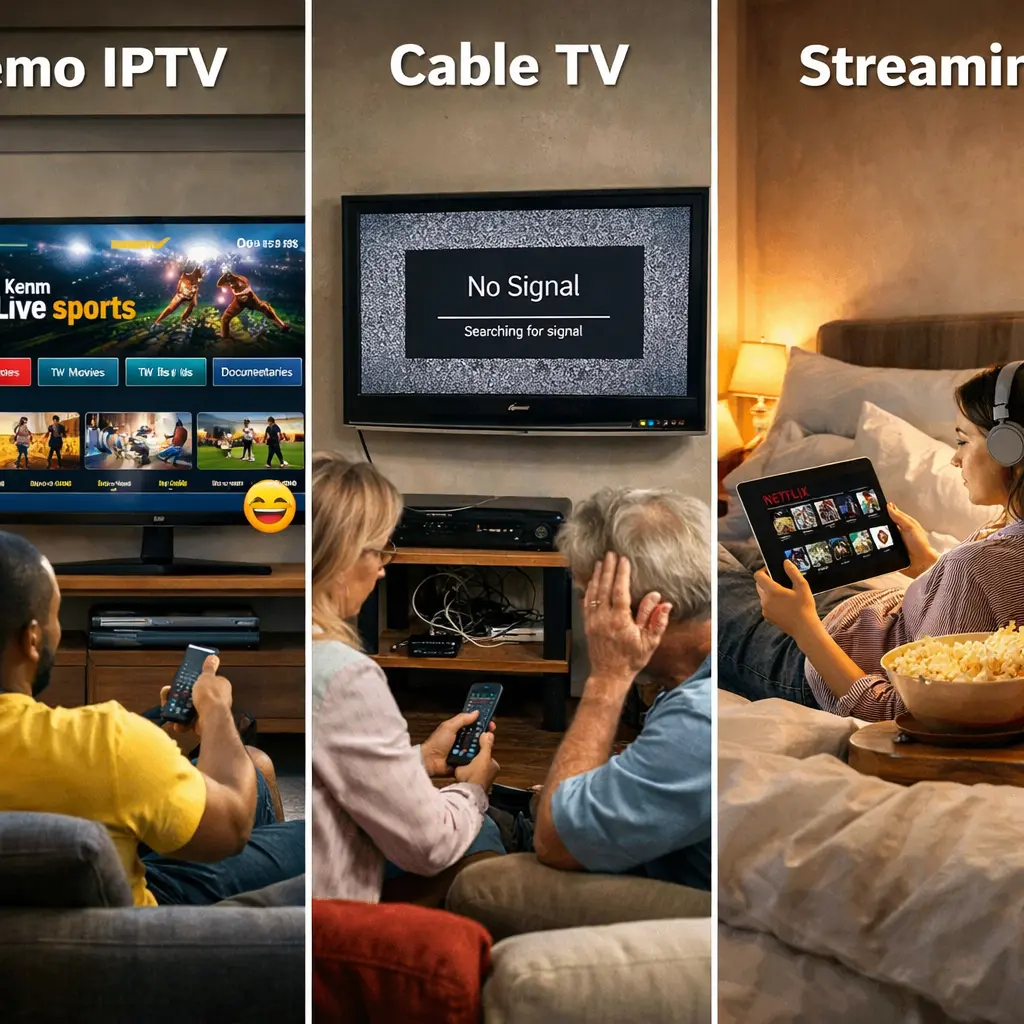
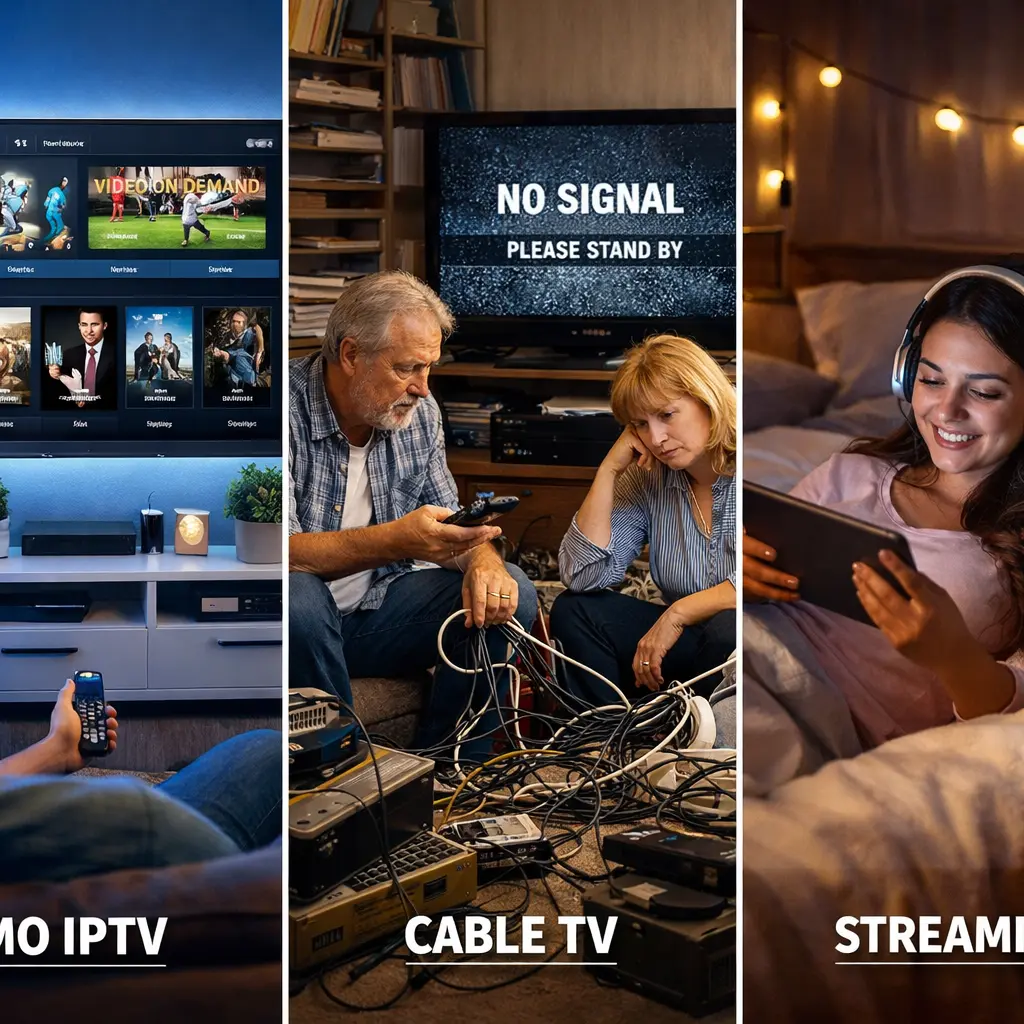
Choosing “Kemo IPTVservice” in 2026 is less about one perfect option and more about matching how you watch (sports? local news? binge shows? background channels?) with the right delivery model:
Cable/Satellite (traditional pay TV / MVPD): packaged channels delivered over coax/fiber/satellite with strong local coverage and familiar support structure.
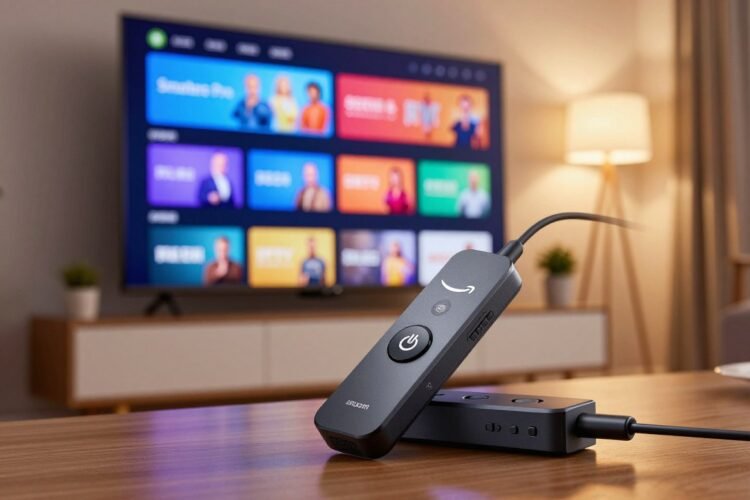
Streaming (OTT): apps delivered over the public internet—either on-demand libraries (Netflix-style) or live TV streaming bundles (YouTube TV-style).
IPTV (Internet Protocol Television): TV delivered via IP networks. In the U.S., this term can mean either (a) managed “TV from your ISP/telco” or (b) a licensed provider delivering live channels over IP—often similar to live TV streaming bundles in your day-to-day experience.
Legal note (important): IPTV is legal when the provider has distribution rights for the channels and content. There are also many unlicensed services that misuse the term Kemo IPTV. Some reporting and court filings have linked the “Kemo IPTV” name to alleged piracy operations—so any provider using that branding must be vetted carefully for licensing and official distribution before you subscribe.
This guide is written as an objective comparison (pros/cons, who each option is best for, what actually drives the bill, and how to decide).
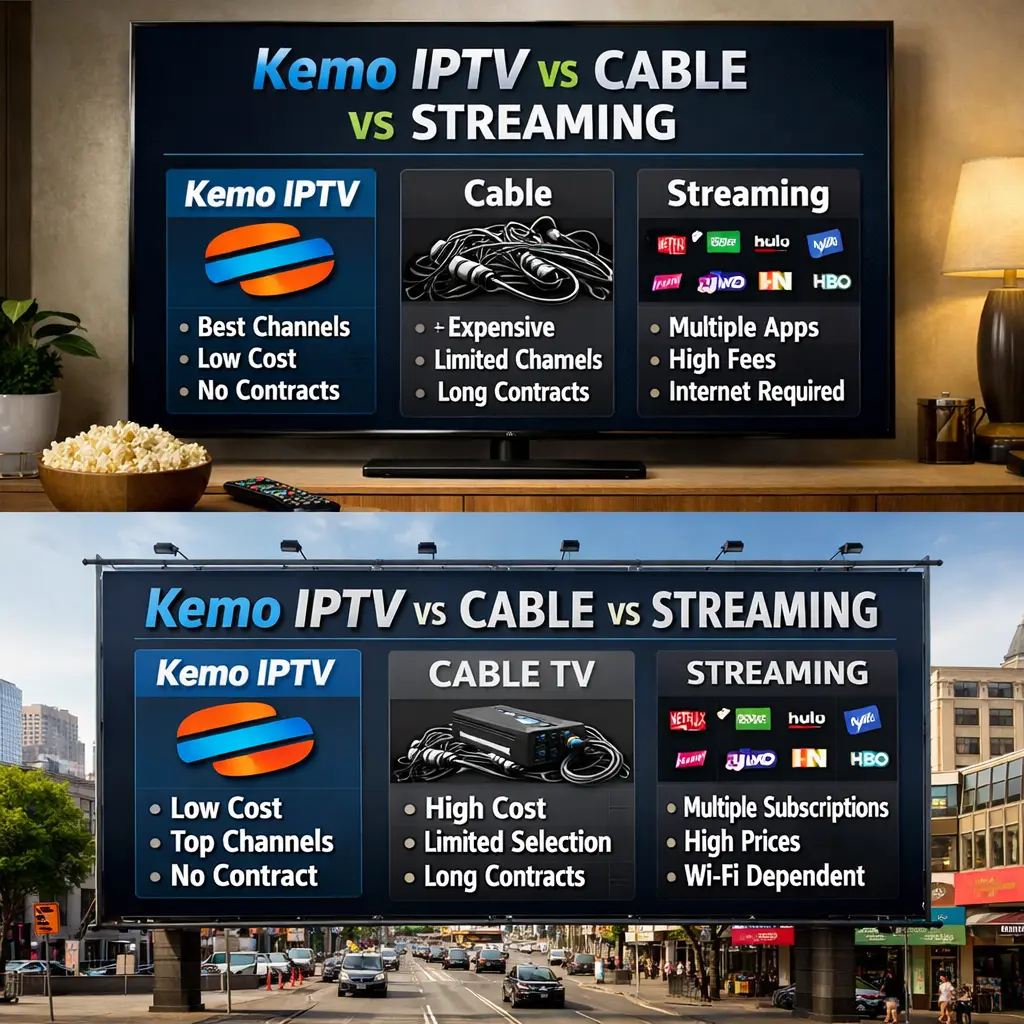
Kemo IPTV vs Cable Comparison table (quick view)
Category
IPTV (Licensed)
Cable/Satellite
Streaming (OTT)
What it is
Live TV delivered via IP networks (often app-based)
Packaged channels via cable/fiber/satellite
Apps over the public internet: on-demand + live TV bundles
Best for
People who want a “channel guide” experience with flexible devices
Households that want locals + sports + a traditional bundle
Cord-cutters who want flexibility and on-demand libraries
Typical cost structure
Subscription + add-ons; may offer tiers
Base package + equipment + add-on fees (broadcast/RSN may apply)
Multiple app subscriptions; live TV bundles cost more than on-demand
Locals (ABC/CBS/NBC/FOX/PBS)
Varies by provider/region
Usually strong
Varies by service and ZIP
Sports
Can be great if licensed + properly engineered
Usually the most “set it and forget it”
Good but can have latency/app outages at peak
DVR
Often cloud DVR/catch-up features
Physical DVR or cloud DVR
Cloud DVR on live bundles; none needed for on-demand
Contracts
Often month-to-month
Often promos/contracts; installation returns
Usually month-to-month (some annual discounts)
Devices
Smart TVs/streamers/phones/tablets
TV box + some apps
Almost any device with an app
Tip: When people say “streaming,” they often mean two different things: On-demand streaming (Netflix/Max) vs live TV streaming bundles (YouTube TV/Hulu + Live TV). The experience and cost are very different.
Definitions: IPTV vs OTT streaming vs cable/satellite
Cable / Satellite (MVPD)
A traditional pay-Kemo IPTV provider packages channels and sells them to subscribers. In U.S. regulatory language, these are commonly discussed as multichannel video programming distributors (MVPDs)—companies that “make available for purchase… multiple channels of video programming.”
What you feel as a customer: you get a channel lineup, a set-top box (or app), locals, billing bundles, and a customer-support pipeline.
OTT streaming (“Over-the-top”)
OTT means video delivered over the public internet, bypassing traditional cable/satellite delivery. It includes both:
On-demand streaming libraries (subscription or ad-supported), and
Live TV streaming bundles that imitate a cable lineup.
IPTV (Internet Protocol Television)
IPTV is TV delivered via IP networks. In practice, it can describe:
Managed IPTV from an ISP/telco (more controlled network), or
Licensed live TV services delivered via apps (which can resemble OTT live bundles day-to-day).
Key takeaway: In 2026, the customer experience matters more than the acronym. The big differences come down to:
Licensing/legitimacy
Reliability under load (sports nights)
Locals coverage
Total monthly cost (including hidden fees and “subscription stacking”)
Support quality
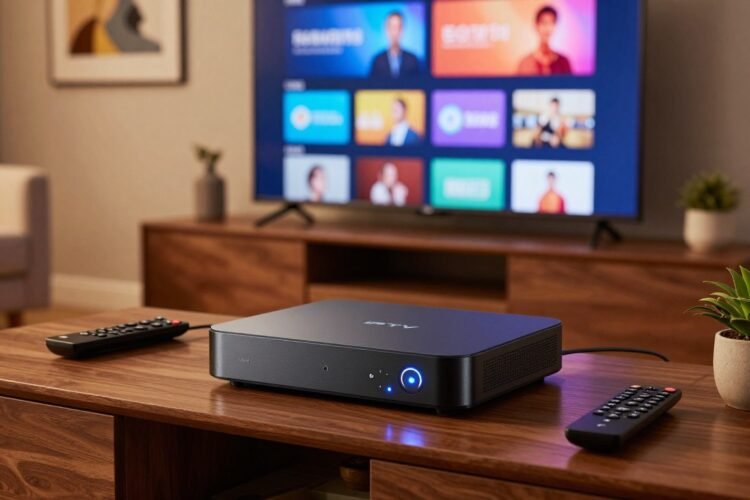
Option 1 — IPTV (licensed)
Who this is for
IPTV (licensed) tends to be best for:
People who want a channel guide + “flip TV” experience, but don’t want a cable box
Households that watch international channels or niche categories (when properly licensed)
Multi-device viewers who want TV on smart TVs, phones, tablets, and travel devices
Users who value month-to-month flexibility
What you get (typical features)
A properly licensed IPTV service typically offers:
A live channel lineup
EPG (program guide)
Optional cloud DVR / catch-up (depends on rights and platform)
Apps for major platforms (Android TV/Google TV, Apple TV, mobile, web)
Pros
Flexible devices: works across modern streaming hardware without the “rent a box” feeling
Often simpler cancellation: many IPTV-style services are month-to-month
Better portability: watch at home and on mobile (subject to licensing/geo rules)
Cons / watch-outs (important)
Licensing variance: “IPTV” does not automatically mean legal—rights must be clear
Support quality varies widely: the gap between “excellent” and “ghost town” support can be huge
Locals can be inconsistent: depends on region and carriage agreements
Reliability depends on engineering: live sports nights reveal who built for peak traffic
Callout: Cybersecurity researchers and news outlets have repeatedly warned that unlicensed IPTV operations can expose users to fraud/malware and unstable service. That’s a strong reason to stick to licensed providers and official app stores.
Cost drivers (what changes the bill)
Even without quoting exact prices, the biggest Kemo IPTV cost drivers are:
Number of concurrent streams (one TV vs a whole household)
Add-ons (premium networks, sports packs, international packs)
Cloud DVR storage (hours, retention period)
Resolution tiers (HD vs 4K, where offered)
Support tier (priority support sometimes costs extra)
Sports/news reliability (general)
Licensed IPTV can be very good for sports/news when:
The provider has strong CDN/streaming infrastructure
The app supports stable adaptive bitrate streaming
The provider has enough capacity for peak events
But if a service is underbuilt, you’ll feel it as:
buffering spikes at prime time
audio sync issues
“channel temporarily unavailable” messages during big games
DVR/catch-up (general)
DVR and catch-up depend on:
what rights the provider negotiated (not all channels allow the same replay features)
whether the platform offers cloud DVR and how it’s implemented
As a concept, cloud DVR stores recordings online rather than on a box, enabling playback across devices.
Customer support expectations
A good IPTV provider should offer:
clear account portal and self-serve troubleshooting
ticketing or live chat with realistic response times
status page or proactive outage communication
If you can’t find real support channels (or only find Telegram/DM-only “support”), treat that as a risk signal.
Contract flexibility
Often month-to-month, sometimes discounted longer terms. The key is transparent renewal terms and refund policy clarity (time window, eligibility, payment method).
Device compatibility
Usually strong—especially if the provider supports mainstream platforms:
Android TV / Google TV
Apple TV / iOS
Roku (if officially supported)
Web browsers
Mobile devices
Option 2 — Cable / Satellite
Who this is for
Cable/satellite is often best for:
People who want maximum simplicity (install → channel numbers → done)
Households that rely on local channels and regional sports coverage
Viewers who want traditional customer support (phone techs, local service availability)
People who prefer bundling internet + TV in one bill (even if not always cheapest)
Pros
Reliability and predictability: especially for live channels during peak viewing
Strong locals + regional coverage: locals are typically baked into packages
Sports availability: regional sports is often easier to access (though it can cost more)
Fees and add-ons can inflate the bill: broadcast TV fees, regional sports fees, equipment rental
Contract/promo complexity: pricing can jump after promotional periods
Less device-native: you often still rely on a primary box, with apps as secondary
Cost drivers (the “why did my bill go up?” list)
Cable bills grow because of a mix of:
Promotional pricing expiration
Equipment rental (boxes, DVR, remotes)
Broadcast TV fees / surcharges
Xfinity notes its Broadcast TV Fee is an itemized charge that’s not government-mandated and can change, tied to costs of carrying local broadcast stations.
Spectrum describes a Broadcast TV Surcharge as a pass-through fee reflecting charges from local stations.
Regional Sports Fees (RSN): DIRECTV, for example, explains its Regional Sports Fee varies by ZIP/package and applies to certain tiers.
Streaming (OTT live bundles) can be great, especially with:
strong home internet
a modern streaming device
ethernet or strong Wi-Fi
IPTV (licensed) depends heavily on provider quality
A licensed IPTV provider can match streaming bundles—sometimes exceed them in UX—but only if it has:
sufficient capacity
stable apps
responsive support
Avoid the trap: “huge channel counts for tiny prices” are frequently associated with unlicensed operations, and cybersecurity reporting has warned these can carry fraud/malware risks.
Customer support expectations
Cable/satellite
best for traditional support channels and service calls
billing disputes can be time-consuming, but there’s usually a process
Streaming
mostly self-serve + chat
fewer “human escalation” options
generally easier account management (device lists, password resets)
IPTV (licensed)
ranges from excellent to poor
the best providers publish: support hours, SLAs, status pages, and clear refund/cancellation terms
Contract flexibility & cancellation friction
Cable/satellite
Expect:
promo periods
equipment returns
possible early termination fees (depends on plan/provider)
Streaming
Expect:
month-to-month cancellation
fewer hoops
sometimes discounted annual plans (trade flexibility for savings)
IPTV (licensed)
Often month-to-month, but:
always check auto-renew settings
demand a clear refund policy and transparent billing descriptors
Device compatibility & household setup
Cable/satellite
best on TVs with provider hardware
apps exist but quality and availability vary
multi-room often means more boxes or app setups
Streaming
best overall device coverage
easiest for families with mixed devices (phones/tablets/TVs)
IPTV (licensed)
can be very good if it supports mainstream platforms
check:
Android TV/Google TV support
iOS/Apple TV support
whether casting is supported
stream limits per account
Decision checklist (10 questions)
Use these 10 questions to choose confidently:
Do I watch live sports weekly (or only occasionally)?
Do I need local channels (news/weather) in my ZIP?
Do I prefer a single guide (cable-like) or app hopping?
How many simultaneous TVs/streams do we need?
How important is DVR/catch-up for live shows?
Do I have reliable internet (and can I use ethernet) for the main TV?
Am I willing to manage multiple subscriptions and passwords?
How much do I value customer support I can reach quickly?
Do I want month-to-month, or am I okay with a contract/promo?
What’s my “all-in” budget after add-ons (sports packs, premiums, ad-free upgrades)?
Tip: Write down your must-have channels/events first, then pick the delivery model that gets them legally with the least hassle.
Decision checklist (10 questions)
Use these 10 questions to choose confidently:
Do I watch live sports weekly (or only occasionally)?
Do I need local channels (news/weather) in my ZIP?
Do I prefer a single guide (cable-like) or app hopping?
How many simultaneous TVs/streams do we need?
How important is DVR/catch-up for live shows?
Do I have reliable internet (and can I use ethernet) for the main TV?
Am I willing to manage multiple subscriptions and passwords?
How much do I value customer support I can reach quickly?
Do I want month-to-month, or am I okay with a contract/promo?
What’s my “all-in” budget after add-ons (sports packs, premiums, ad-free upgrades)?
Tip: Write down your must-have channels/events first, then pick the delivery model that gets them legally with the least hassle.
FAQs (People-Also-Ask style)
1) Is IPTV legal in the USA?
It can be—if the provider has proper distribution rights for channels/content. IPTV is a delivery method; legality depends on licensing.
2) What’s the difference between IPTV and streaming?
Streaming (OTT) is delivered over the public internet via apps. IPTV is TV delivered via IP networks and may be managed or app-based. In real life, they can overlap—especially for live channel bundles.
3) Is cable still better for sports?
Often yes for simplicity and predictability, especially for locals and regional sports—but streaming bundles can be excellent with good internet and the right device.
4) Why do cable bills have extra fees?
Providers may add itemized charges like broadcast TV fees and regional sports fees depending on package and location.
5) Do streaming services have contracts?
Most are month-to-month, though some offer annual discounts.
6) Can I get local channels with streaming?
Sometimes—depends on the service and your ZIP code. Check local availability before subscribing.
7) What’s a live TV streaming bundle?
It’s an OTT service that offers a cable-like lineup and guide (often described as a virtual MVPD).
8) Do I need DVR if I stream?
For on-demand streaming, no. For live TV bundles, cloud DVR is often included or available as an add-on.
9) Why is streaming delayed compared to cable?
Streaming can introduce extra buffering/processing time, so it may be behind “real-time” broadcast.
10) Which option is best for seniors or non-tech users?
Cable/satellite is often easiest. If using streaming, choose one simple interface and a reliable device (and keep the subscription stack small).
11) Is IPTV always cheaper than cable?
Not necessarily. Licensed providers can be competitively priced, but your total cost depends on streams, add-ons, DVR, and whether you’re replacing multiple services.
12) What should I look for to avoid risky IPTV services?
Use only licensed providers with official apps and transparent support/billing. Cybersecurity reporting has highlighted fraud/malware risks tied to piracy networks.
Because the “Kemo IPTV” name has appeared in legal reporting tied to alleged piracy operations, you should treat any “Kemo IPTV” branded offer as something to verify thoroughly before buying.
That said, if you are evaluating a licensed IPTV provider called Kemo IPTV (or a similarly named brand) and it meets the criteria below, it can be worth a trial—especially if you want a channel-guide experience without a cable box.
Why consider a licensed IPTV provider like Kemo IPTV (what to verify)
Licensed content: clear statement of rights/regions and legitimate distribution partnerships
Official apps: available through official app stores (no sideload-only workflows)
Real customer support: documented support channels + response-time expectations
Uptime transparency: status page or clear outage communication practices
Refund policy clarity: written policy with a specific time window, eligibility rules, and refund method
Soft CTA: If your priority is a live channel guide, multi-device viewing, and month-to-month flexibility, and Kemo IPTV can demonstrate licensing + official distribution + reliable support, it’s reasonable to compare it against a live TV streaming bundle and cable—then choose the one that best fits your sports/locals needs and tolerance for troubleshooting.